

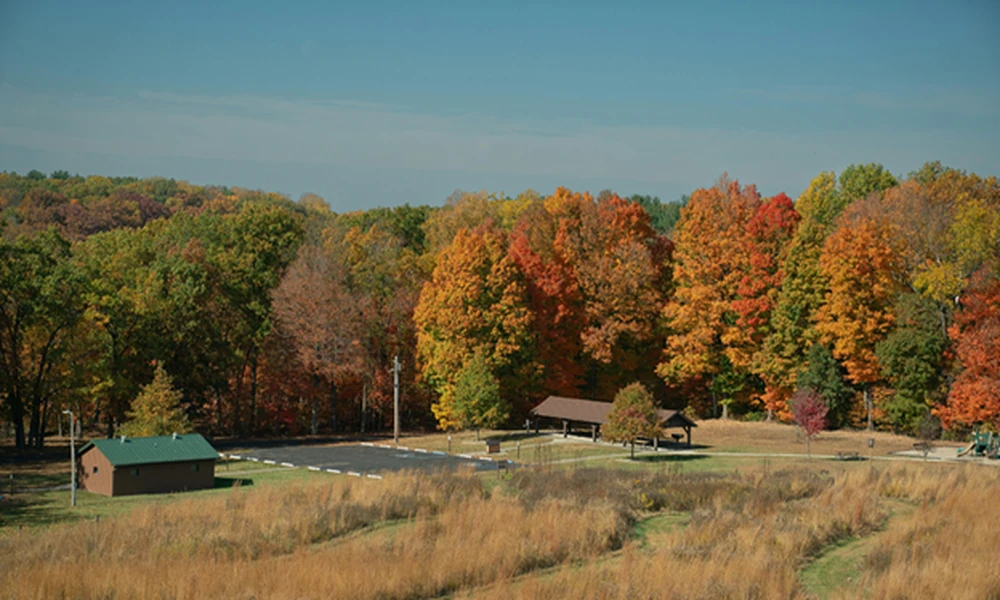
Indiana is known for its beautiful, lush landscapes and the stunning canopy of trees that blankets the Hoosier State. From the historic neighborhoods of Indianapolis to the sprawling properties in Carmel and Fishers, mature trees add immense curb appeal and shade to our homes.
However, that beautiful canopy comes with a hidden cost for homeowners: a constant barrage of debris aimed directly at your roofing system.
When tree debris accumulates in your gutters, it blocks water flow, leading to rotted fascia boards, roof leaks, and even foundation damage. While all deciduous trees shed, some are far worse offenders than others. If you have any of these seven common Indiana trees in your yard, your gutters are likely working overtime.
1. The Silver Maple (Acer saccharinum)
The Silver Maple is incredibly common in Indiana due to its rapid growth and shade capacity. Unfortunately, it is a year-round menace for gutter systems.
- The Culprit: In the spring, Silver Maples drop billions of winged seeds, affectionately known as “helicopters” or samaras. These seeds fly directly into gutter troughs, where they quickly swell with moisture.
- The Threat: If left uncleaned, these seeds will actually take root in the damp organic matter, turning your gutters into elevated flower beds. In the fall, they follow up with a massive drop of large, dense leaves.
2. Oak Trees (White and Red Oaks)
Oaks are sturdy, majestic Midwestern staples, but they are notorious double-offenders when it comes to gutter clogging.
- The Culprit: In late spring, oaks drop “catkins”-the long, stringy, pollen-producing tassels that drape over everything. They form a thick, thatch-like mat in your gutters.
- The Threat: In autumn, oaks drop heavy leaves that decompose slowly, alongside a heavy crop of acorns. Acorns roll down the pitch of your roof like bowling balls, jamming themselves directly into downspout openings.
3. The Sweetgum (Liquidambar styraciflua)
If you have a Sweetgum tree on your property, you already know the frustration it causes for lawn mowers-but it’s just as bad for your roofline.
- The Culprit: The infamous “gumballs.” These spiky, woody, spherical seed pods drop in massive quantities from autumn through winter.
- The Threat: Because of their round, rigid shape, gumballs roll easily down shingles and wedge perfectly into downspout elbows. Once a few gumballs create a bottleneck, smaller leaf debris stacks up behind them, completely stopping water flow.
4. Eastern White Pine (Pinus strobus)
Many Indiana homeowners plant White Pines as privacy screens or windbreaks. While they don’t drop large leaves, they are arguably more dangerous to your drainage system.
- The Culprit: Pine needles and sticky sap.
- The Threat: Unlike broad leaves that might blow out of a gutter when dry, pine needles act like hair in a shower drain. They weave together into a tight, dense mesh that traps tiny shingle granules and dirt. Combined with the tree’s natural sap, this creates a waterproof sludge that causes gutters to overflow almost immediately during heavy rain.
5. American Sycamore (Platanus occidentalis)
Easily recognized by their beautiful, ghostly white peeling bark, Sycamores love the moist soil found across Indiana.
- The Culprit: Massive, dinner-plate-sized leaves, brittle twigs, and fuzzy seed balls.
- The Threat: Because Sycamore leaves are so large and rigid, just a handful of them can completely bridge across the top of a gutter trough. This creates a dam that prevents water from ever entering the gutter system, forcing rainwater to sheet over the edge and pool directly against your home’s foundation.
6. River Birch (Betula nigra)
Popular in Indiana landscaping for its unique, paper-like exfoliating bark, the River Birch is a beautiful tree that sheds almost continuously throughout the year.
- The Culprit: Small, delicate leaves, fine twigs, and catkins.
- The Threat: The River Birch is highly sensitive to dry spells. During hot Indiana summers, it will drop a significant portion of its small leaves as a defense mechanism. Because it sheds twigs and leaves spring, summer, and fall, it requires homeowners to maintain a constant cleaning schedule.
7. Black Walnut (Juglans nigra)
Native to Indiana forests and frequently found in older residential neighborhoods, the Black Walnut is a heavy-duty threat to your home’s exterior.
- The Culprit: Large compound leaves and tennis-ball-sized walnuts.
- The Threat: The large stalks of the compound leaves don’t blow away easily. Furthermore, when the heavy walnuts drop from high branches, they don’t just clog gutters-they can actually dent aluminum seamless gutters and crack plastic gutter guards.
If your property is home to any of these species, a single annual gutter cleaning is rarely enough to protect your investment. Striking a balance between enjoying Indiana’s natural beauty and protecting your home requires a proactive maintenance plan.
For homes surrounded by heavy shedders like Maples and Oaks, clearing the system at least twice a year-once in the late spring after seed drop, and once in the late autumn after the final leaves fall-is essential. Neglecting this chore opens the door to expensive wood rot, mold, and basement flooding. When the seasonal debris starts to stack up, scheduling a professional Indianapolis gutter cleaning is the safest and most effective way to ensure your home’s drainage system is ready for the next Midwestern thunderstorm.