

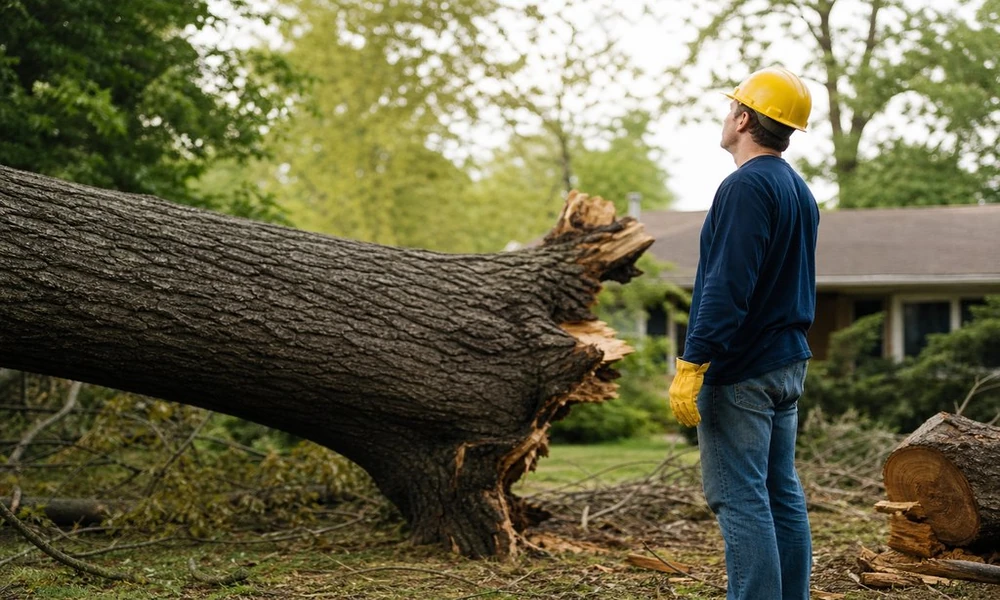
You’re not going to find many options for getting a perfectly healthy tree removed for free – however, if you have a tree that poses a hazard or threatens to damage shared infrastructure, there are ways you can get it removed for free.
Know What Kind of Tree Removal You Need
It’s important to understand the reasons you want the tree taken down. If the tree is simply growing into your neighbor’s yard, blocking your view, or shedding leaves on your lawn, it’s probably going to be up to you to pay for its removal. Trees that pose a threat, on the other hand, may be covered by a public program, a utility, or an insurance policy.
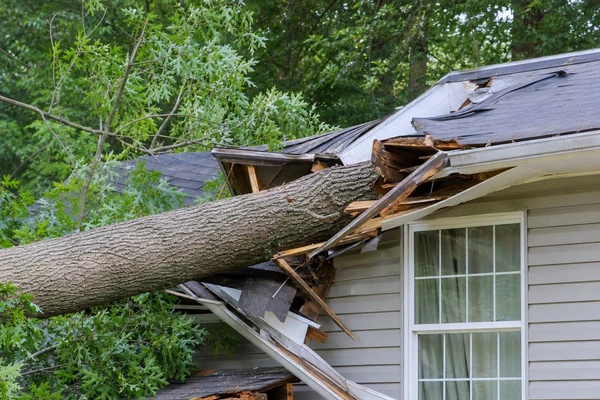
Trees that may qualify for free removal include those that have a leaning, splitting, or hollow trunk; threaten sidewalks, driveways, roofs, or other structures; have roots that threaten utility lines or have already buckled pavement; were damaged in a storm and are now unsafe; have died or been weakened by insects, decay, or tree disease, which Britannica describes at https://forestpathology.org/general/what-is-a-tree-disease/; or have fallen and are blocking access to your home or damaging your property.
If you do qualify for free removal, you’ll probably need to prove that your tree poses a danger. If possible, take photos of the tree from a safe distance, and jot down when you first noticed the problem. Keep these records handy in case you need to submit them to an insurance company, utility, or property manager. And never attempt to remove branches yourself – even small limbs can fall out of nowhere and seriously injure you.
Is a Utility Responsible for Your Tree Removal?
If your tree is growing into overhead power lines, there’s a decent chance a utility will either remove it for free or at least trim back the problematic branches for you. Many utilities are responsible for maintaining clearance around their own equipment, and will often send an employee to inspect trees that may pose a threat to power lines. Keep in mind that they’re only likely to trim the branches that are threatening to make contact with the line – they’re not obligated to make your yard look pretty.
Never try to remove branches yourself if they’re hanging near power lines – call the utility and wait for their instructions. If you see downed or sparking power lines, stay away from them, keep children and pets away from them, and call the utility or emergency services right away.
Local Programs May Cover Hazardous Trees
Some municipalities’ public works departments, HOAs, and other groups offer programs to help remove dangerous trees. Find out if there are any such programs available in your area, and ask about qualifications, which may be based on homeownership status, income, the condition of the tree, or whether it’s in or near a public right-of-way. If local assistance is the deciding factor, this overview of free tree removal options in Albuquerque identifies possible programs to consider before you pay privately.
Homeowner’s Insurance Has Limits
If a tree covered under your homeowner’s insurance policy falls on your home, garage, fence, or other insured structure as a result of a covered event, you may be able to file a claim for removal of the tree and debris. Find out exactly what your policy does and doesn’t cover, including whether there’s a deductible and if there are any requirements (e.g., that the damage had to be the result of a covered event that happened suddenly). Note that homeowner’s insurance may not pay for removal of a tree that’s still standing but poses a potential threat.
Removal Costs Can Sometimes Be Reduced
Before agreeing to removal services, get a sense of what’s included. This should at minimum include:
- Cutting down and lowering of the tree
- Hauling away of trunk and branches
- Removal of sawdust and other debris
- Any fees associated with permits or trash removal
- Stump removal, this isn’t always included, so ask specifically about stump grinding and make sure any agreement regarding its removal or grinding is in writing
Tree Removal Scams and Safety Risks
If someone offers to remove your tree for free as long as they can keep the wood, tread carefully. Although you may think you’re getting a good deal, especially if your tree is particularly large or made of a desirable species of wood, you could be held liable for property damage or personal injury that occurs during the removal process. Be sure any contractor you hire is insured and follows proper removal techniques and equipment usage, and be sure to understand the scope of work being done before giving your OK.
If your tree removal isn’t an emergency situation, get more than one written bid. Ask if a company charges extra for removing a tree stump less than 12-inches in diameter, this question alone could help you understand the breadth of services included in each company’s bid.
Lastly, cordon off the area around the tree in question, keeping people, pets, vehicles, and yard furniture well away. Take pictures, and jot down a to-do list of people you need to call.