

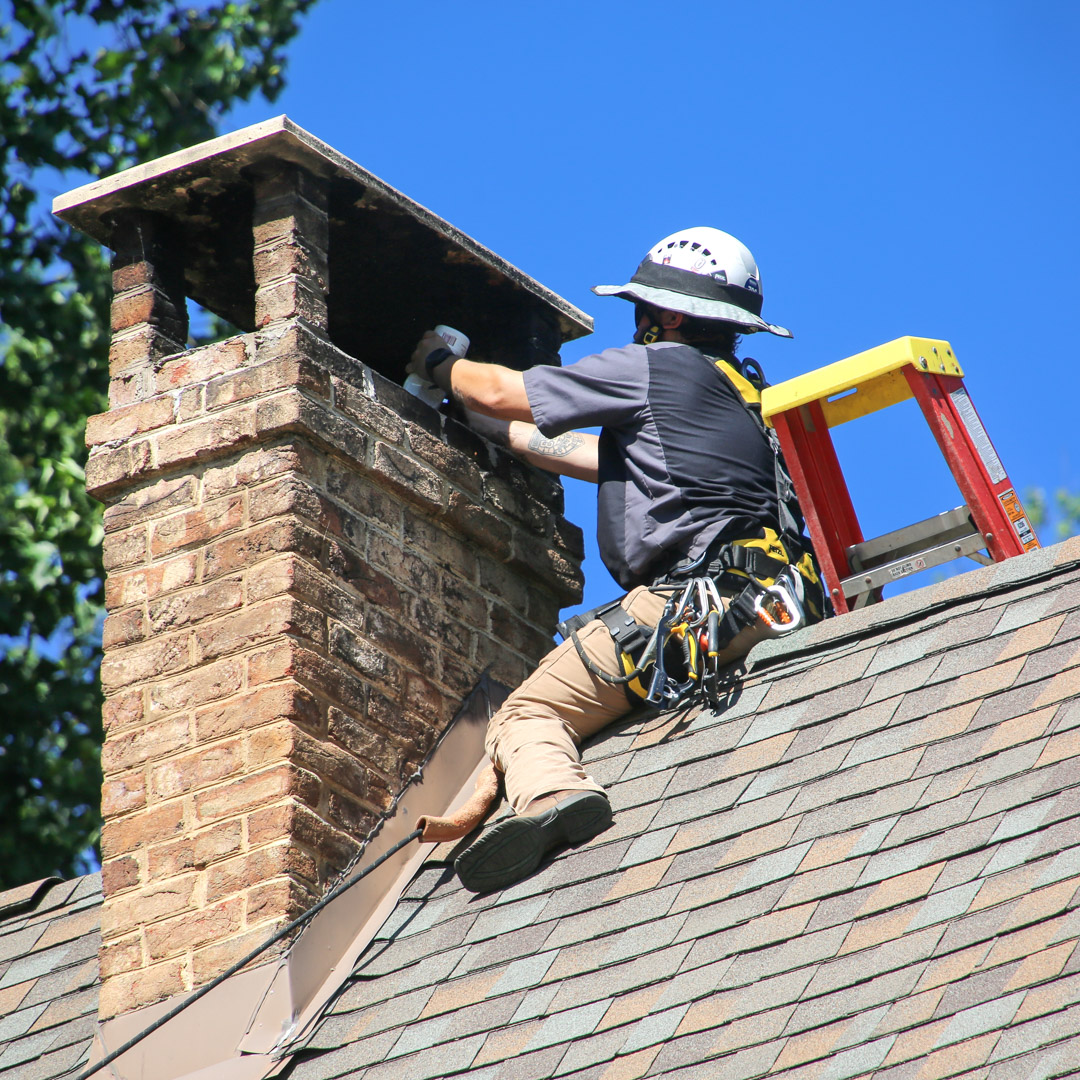
As temperatures begin to drop, fall is the ideal time to prepare your chimney for another Minnesota heating season. A proper chimney maintenance checklist can help Twin Cities homeowners spot moisture damage, creosote buildup, structural problems, and other issues before they become expensive or dangerous.
Your chimney faces a demanding combination of cold temperatures, snow, ice, moisture, and repeated heating and cooling cycles. Taking care of routine maintenance before winter arrives can help your fireplace or wood-burning appliance operate more safely and efficiently.
Inspect the Chimney From the Outside
Start your fall chimney inspection outdoors. Walk around the house and look at the masonry, chimney cap, flashing, and visible mortar joints. You do not need to climb onto the roof to identify obvious warning signs.
Look for cracked bricks, loose masonry, deteriorating mortar, or areas where the chimney appears to be leaning. White staining, sometimes called efflorescence, can also indicate that moisture is moving through the masonry.
Pay particular attention to the chimney crown and cap. The crown helps direct rain and melting snow away from the chimney structure, while a properly fitted cap helps keep precipitation, leaves, and animals out of the flue.
If you notice significant deterioration, arrange a professional inspection rather than attempting a complicated repair yourself. Homeowners dealing with visible masonry damage may need chimney repair for Twin Cities homes before using the chimney during the colder months.
Check for Water Damage and Leaks
Moisture is one of the biggest concerns for masonry chimneys in a cold climate. Water can enter through damaged crowns, cracked masonry, worn flashing, or an improperly fitted chimney cap.
Once temperatures fall below freezing, trapped moisture can freeze and expand inside porous masonry. Repeated freeze-thaw cycles can gradually contribute to cracking, spalling, and mortar deterioration.
Inside the home, inspect the ceiling and walls around the chimney for signs of water intrusion. Brown or discolored patches, peeling paint, damp odors, or damaged drywall should not be ignored.
A small leak may seem minor in the fall, but winter weather can make an existing moisture problem considerably harder to address.
Have the Flue and Fireplace Checked
The chimney flue provides the passage for smoke and combustion gases to leave your home. Over time, burning wood can produce soot and creosote, a combustible material that can accumulate inside the flue.
A professional chimney inspection can help determine whether the flue has excessive buildup, damage, or obstructions. The appropriate level of inspection depends on the chimney’s condition, history, and whether there have been changes to the heating system.
Homeowners should also check the fireplace itself for damaged firebricks, cracks, loose components, or other visible problems. Do not use a fireplace if you have reason to believe the chimney is blocked or structurally compromised.
Clean the Chimney When Necessary
Chimney sweeping is not simply a seasonal cleaning task. The need for sweeping depends on factors such as how frequently you use the fireplace, what you burn, and how much creosote accumulates.
If you regularly burn wood, have the chimney evaluated before the main heating season. A qualified professional can determine whether cleaning is appropriate based on the amount of combustible buildup inside the flue.
Avoid assuming that a chimney is clean simply because the fireplace looks clean. Much of the buildup that matters is inside the chimney and cannot be evaluated from the firebox alone.
Inspect the Chimney Cap and Damper
A chimney cap serves several useful purposes. It helps prevent rain and snow from entering the flue while also reducing the likelihood of leaves, branches, and animals getting inside.
Check that the cap is securely attached and free of excessive rust or damage. If the chimney has a screen, make sure it is not clogged with debris.
The fireplace damper also deserves attention. It should open and close properly and create a reasonably good seal when closed. A damaged or stuck damper can affect how the fireplace operates and may allow conditioned indoor air to escape when the fireplace is not in use.
Prepare Your Firewood Properly
Good chimney maintenance starts with what you burn. If you use a wood-burning fireplace or stove, burn properly seasoned firewood rather than wet or freshly cut wood.
Wet wood tends to burn less efficiently and can produce more smoke, which can contribute to deposits inside the chimney. Store firewood off the ground and protect it from excessive rain and snow while allowing adequate airflow.
Never burn household trash, painted or treated wood, plastics, or other materials that are not intended for your fireplace or wood-burning appliance.
Complete This Fall Chimney Checklist
Before winter settles in, walk through these basic maintenance tasks:
- Inspect visible masonry for cracks, loose bricks, and deteriorating mortar.
- Check the chimney crown and cap for damage.
- Look for signs of water intrusion around the chimney indoors.
- Have the flue inspected for buildup, damage, or obstructions.
- Schedule a chimney cleaning when professional evaluation indicates it is needed.
- Test the fireplace damper to make sure it operates correctly.
- Check the firebox and visible components for damage.
- Make sure firewood is properly seasoned and stored.
- Confirm that smoke and carbon monoxide alarms are working.
- Address significant chimney problems before regular winter use.
Know When to Call a Professional
Some chimney maintenance can be handled through simple visual checks, but not every problem is suitable for a DIY fix. Masonry repairs, flue inspections, chimney sweeping, flashing problems, and structural concerns should generally be evaluated by someone with the appropriate training and equipment.
It is especially important to seek professional help if you notice loose bricks, substantial cracks, recurring leaks, unusual fireplace odors, smoke entering the home, or a chimney that appears unstable.
Fall is also a practical time to schedule an inspection because identifying problems before heavy snow and freezing temperatures arrive gives you more opportunity to address them safely.
Common Chimney Maintenance Mistakes to Avoid
One of the most common mistakes is waiting until the first cold weekend to discover that the chimney needs attention. Emergency scheduling can be inconvenient, particularly when several homeowners are preparing their fireplaces at the same time.
Another mistake is focusing exclusively on the inside of the fireplace. Chimney problems can begin with exterior masonry, flashing, the crown, or the cap, so a complete maintenance approach should consider the entire system.
Finally, do not ignore small signs of deterioration. A cracked mortar joint or minor leak may appear insignificant, but winter moisture and repeated freezing can make masonry problems worse.
Why Fall Is the Right Time for Chimney Maintenance
Fall provides a useful maintenance window because the chimney can be inspected and repaired before regular winter use begins. Twin Cities homeowners also have to account for the effects of freezing temperatures, snow, ice, and moisture on exterior masonry.
Preparing early gives you time to identify problems, arrange professional service when necessary, and make sure your fireplace is ready for colder weather. It also helps prevent the common situation of discovering a chimney problem when you are already relying on the fireplace for warmth.
Conclusion
A fall chimney maintenance checklist should cover more than sweeping the flue. Twin Cities homeowners should inspect exterior masonry, check for water damage, examine the chimney cap and crown, evaluate the fireplace and damper, and arrange professional inspection or cleaning when necessary.
The goal is simple: identify potential problems before winter puts additional stress on the chimney. A little preparation in the fall can help you approach the heating season with greater confidence and a better understanding of your chimney’s condition.
=============================================================================
Paying attention to these changes allows homeowners to respond before a small issue becomes a larger disruption. Regular professional maintenance, sensible filter care and timely repairs can help keep an air conditioning system dependable and comfortable throughout the cooling season.