

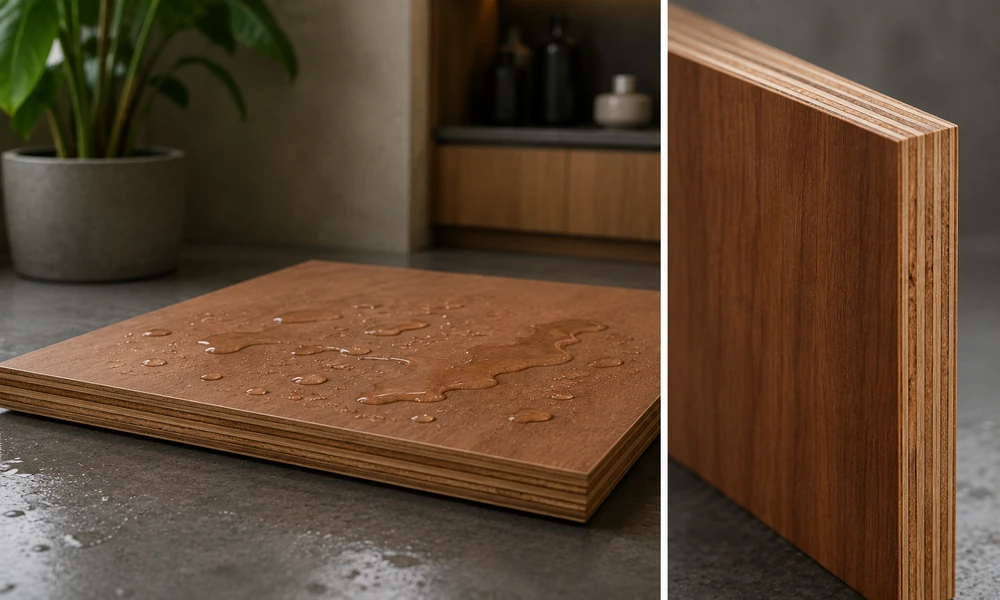
Waterproof plywood is always used for making furniture and kitchen cabinets, as well as for interior units where moisture is present. Simply choosing plywood with the waterproof label is not enough. Buyers need to pay attention to various features related to the construction, bonding, thickness, surface quality, grade, and specifications of the plywood product. With these checks, you can make sure the plywood fits the environment in which it will be used.
Water-Resistant Bonding
Adhesives used for bonding veneer layers are one of the best features of waterproof plywood. A reliable bond between layers guarantees the durability of the product in humid conditions, splashes, and cases of water contact.
Make sure to verify the grade of plywood and the information about its bonding system before making a purchase. Poor bonding will lead to peeling and delaminating plywood, reducing its strength. The issue is particularly crucial for kitchen cabinets, sink cabinets, and bathroom furniture where moist conditions are always present.
Strong Core Construction
What is important is the construction of the core. Take a closer look at the sheet edges to see if there are big gaps, poorly fitted laminations, or defects. The core should consist of properly arranged layers.
When there are big voids in the core, they can weaken the sheet and make them visible as soon as the cutting process happens. If it is possible, accurately measure a few locations across the sheet and compare the actual thickness of the sheet with the specifications given.
Discrepancies in thickness can lead to problems during cutting, joining, finishing, or installing. In furniture production, uneven thickness may interfere with how joints are formed and how lines in assembly are matched.
Quality Face Veneer
The surface veneer has a direct effect on the appearance of the product and finishes. Look closely at the surface for cracks, sanded spots, loose areas, deep knots, discolourations, or spots that haven’t been properly repaired.
It does not always mean poor quality when a natural wood shows variations, but an excessive number of defects will, by all means,complicate the job of putting it into laminated, painted, polished, or finished form.
Correct Plywood Grade
Not all products resistant to water are designed for the same conditions.
If you buy plywood, you have to identify the grade and its purpose before you make your choice.
Take into consideration the degree of humidity, the required load, how often this product will be in use, and external conditions. A piece of plywood suitable for the furniture in the kitchen is certainly not the best choice for any other demanding task.
Resistance to Delamination
Waterproof plywood is required to have high resistance to delamination in the conditions for which it was manufactured.
Before purchasing such a product, check the edges of the plywood for peeling, lifting, or signs of separation.
If the layers start separating, the sheet has to be thoroughly examined before it can be made a part of any project. Proper installation and protection against moisture are important to diminish the risk of delamination.
Standards and Product Specifications
Good information about the product allows one to compare it with other products.
Check the plywood grade and thickness, the manufacturer, bonding parameters, and its purpose.
Well-reputed firms like Royale Touche manufacture plywood products with specific parameters, which makes it possible to understand what characterises a certain type of plywood and how to use it correctly.
Suitability for Different Applications
It is very important that one takes into account the environment where plywood will be used while choosing the right type of plywood.
Moisture-ridden places: kitchens, bathrooms, utility areas, and storage units may require more careful consideration than wood for dry environments.
When selecting plywood, you should think over several things: humidity, water impact, ventilation, and loading. Proper sealing and installation are equally important since waterproof plywood may not be completely immune to long exposure to moisture.
Appropriate Installation and Protection of Edges
Correct installation and proper edge protection of waterproof plywood ensures that its functioning will not be compromised. It is necessary to protect exposed edges like joints and cuts because moisture can penetrate the vulnerable areas and cause damage.
Using proper sealants and finishing techniques can help overcome the problem of moisture.
Conclusion
The choice of waterproof plywood is not limited to looking for the waterproof label. People have to check the quality of bonding, state of the core, consistency of thickness, quality of the surface veneer, grade, resistance to delamination, and specifications connected to the plywood.