

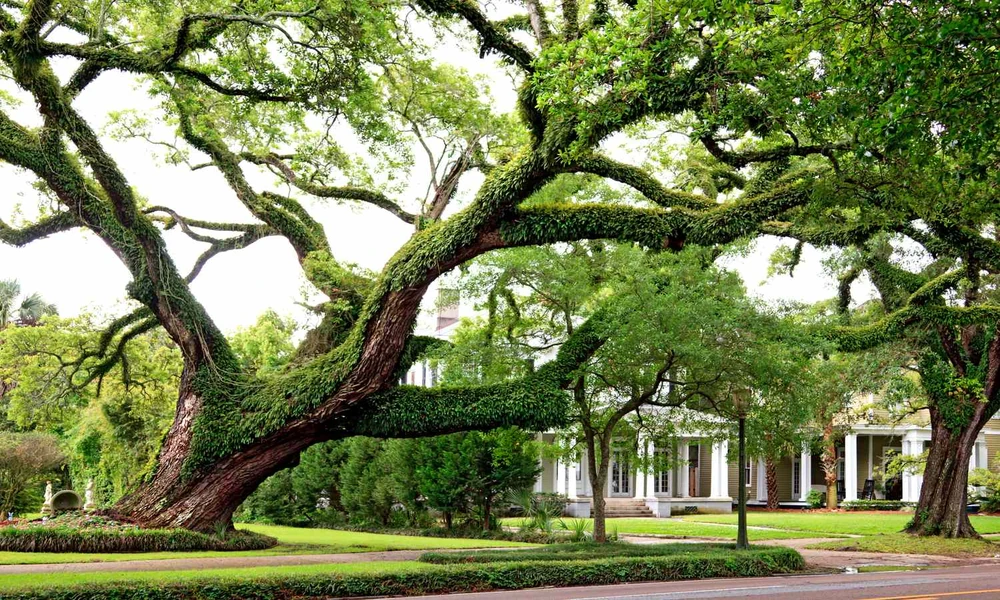
A tree rarely comes down without notice. Long before a limb snaps or a trunk leans over a roof, the tree usually shows quiet signals in its bark, leaves, roots and shape. The trouble is that most of us glance at our trees without really looking at them. The team at Douglass Tree LLC spends its days reading those signals, and this guide teaches you to spot the same ones from your own yard, using nothing more than a slow walk and a careful eye.
Start From the Ground Up
Begin at the base and work upward, since the roots and lower trunk carry the whole structure.
The root zone. Look for soil that is heaving or cracking on one side, roots that have been cut by trenching or construction, or mushrooms and conks growing near the base. Fungal growth often signals decay in roots or wood that you cannot see.
The root flare. A healthy trunk widens gently where it meets the ground. If the trunk goes straight into the soil like a telephone pole, mulch may be piled too deep or soil may have been added around it, which can suffocate roots over time.
Standing water and compaction. Soil that stays soggy or is packed hard by vehicles and foot traffic starves roots of oxygen. Stress from this often shows up in the canopy years later.
Move Up the Trunk
The trunk is the tree’s lifeline, and damage here deserves serious attention.
- Vertical cracks or deep splits can mean the wood is failing under load
- Cavities and hollows reduce strength, though a small hollow does not always mean immediate danger
- Peeling or missing bark in large patches exposes wood to pests and decay
- Oozing sap or dark wet streaks may point to disease or boring insects
- A noticeable lean is most concerning when it is new or increasing, especially if the soil at the base is lifting
A tree that has leaned gently for decades is very different from one that tipped after a storm. Sudden change is the key warning.
Check the Branch Structure
Look at how the limbs attach and how the weight is distributed.
- V-shaped forks with included bark are weaker than U-shaped unions, since bark trapped between two stems prevents a strong bond
- Co-dominant stems of equal size competing for the same space often split in storms
- Crossing and rubbing branches wound each other and create entry points for decay
- Heavy limbs extending over roofs, cars or play areas raise the stakes if anything goes wrong
- Hangers, which are broken branches stuck in the canopy, can fall without warning
Read the Leaves and Canopy
The canopy reflects overall health, though you need to compare against what is normal for that species and season.
| What you see | What it may mean |
|---|---|
| Sparse foliage in one section | Root damage or limb dieback on that side |
| Leaves smaller or paler than usual | Stress from drought, poor soil or nutrient problems |
| Early fall color in midsummer | Stress or disease |
| Bare branch tips at the top | Possible decline, sometimes called crown dieback |
| Dead branches among live ones | Localized failure, pests or disease |
| Heavy sprouting along trunk and limbs | The tree reacting to stress |
A few dead twigs are normal. A pattern of decline across many branches is the signal to watch.
Do Not Forget Pests and Disease
Insects and pathogens often attack stressed trees first, though some can also hit healthy ones. Watch for small round exit holes in bark, fine sawdust piles at the base, sticky residue on leaves, webbing, discolored foliage and unusual growths. Because many problems look alike to the untrained eye, identification matters. The Arbor Day Foundation offers a helpful library of tree care and identification resources that can help you learn what species you have and what typically affects it.
Think About Targets
Risk is not only about how weak a tree is. It is also about what could be hit if it fails. A badly leaning tree in an empty field is a small concern. The same tree beside a bedroom window or driveway is a serious one. When you evaluate a tree, ask three questions:
- How likely is it to fail?
- What is in the failure zone?
- How bad would the consequences be?
This approach helps you decide where to act first.
Storms, Construction and Hidden Stress
Some events leave damage that does not show right away.
- After a storm, check for cracks at limb unions, torn bark and lifted soil even if the tree appears to have survived
- After construction, watch for decline over the following seasons, since severed roots and soil compaction can take years to show
- After drought, trees may drop limbs or decline the following year
- After changes in grade or drainage, roots may be drowned or exposed
What You Can Do Yourself
Some actions are simple and safe.
- Keep mulch two to four inches deep and pulled back from the trunk
- Water deeply during dry spells rather than lightly and often
- Avoid parking or storing materials under the canopy
- Remove stakes and tree ties from young trees once established
- Photograph the tree each season to track changes
What to Leave to a Professional
Climbing, cutting large limbs and working near power lines are dangerous. Never attempt removal of a large tree, work above ground level with a chainsaw or pruning near electrical wires on your own. If you see signs such as large cracks, a sudden lean, extensive dead wood or fungal growth at the base, ask a qualified arborist to assess the tree. A good professional explains what they found, what the options are and what each will cost, rather than defaulting to removal.
Questions to Ask Before Hiring
- Are you insured, and can you provide proof of liability and workers’ compensation coverage?
- Do you have certified arborists on staff?
- Will you provide a written estimate that describes the work in detail?
- How will you protect the lawn, roof and structures during the job?
- What is included in cleanup and debris removal?
- Is there a safer or less costly alternative to removal?
A Quick Seasonal Tree Check
- Spring: Look for leaf-out problems, winter damage and new growth patterns
- Summer: Watch for wilting, early leaf drop and pest activity
- Fall: Examine structure while leaves are dropping and note any weak unions
- Winter: Bare branches make cracks, dead limbs and poor structure easy to see
Final Thoughts
Trees communicate constantly, just not in words. The base, the trunk, the branches and the canopy each tell part of the story, and the most dangerous problems usually leave clues well in advance. Take a slow lap around your property each season, keep notes and photos, and call in a qualified arborist when something does not look right. Catching a warning sign early can save a tree, protect your home and keep everyone in your yard safe.